Currently Empty: $0.00

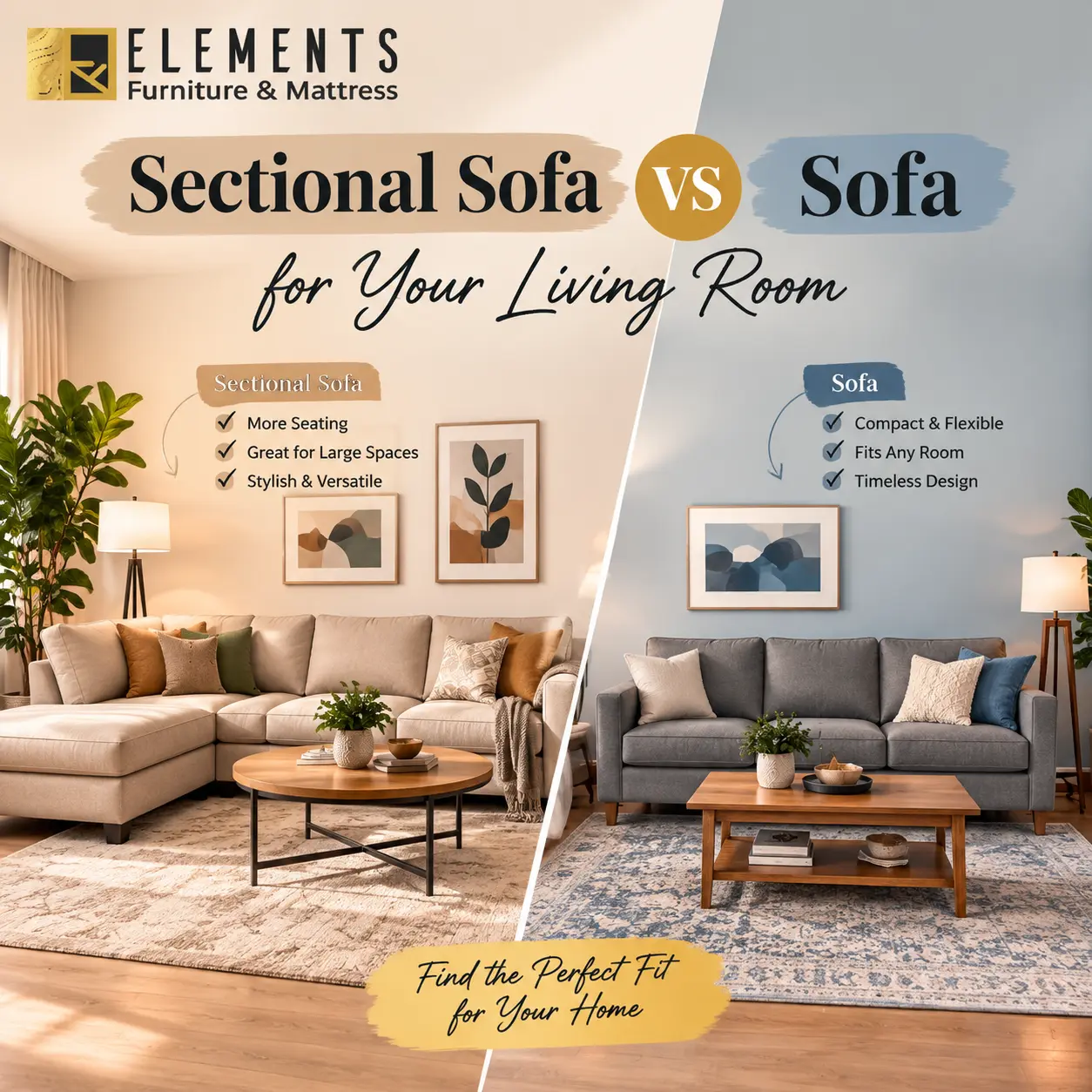
A living room can look completely different once the right seating is in place. The sectional sofa vs sofa decision is not simply about choosing a shape you like best. It affects how many people can relax comfortably, how easily you can move through the room, and whether your space feels open or overcrowded.
For a first apartment, a busy family room, or a long-overdue refresh, the best choice comes down to your room size, household habits, and the way you want your home to feel. Both options can deliver big comfort and standout style at an affordable price. The key is choosing the one that works harder for your everyday life.
Sectional Sofa vs Sofa: The Big Difference
A traditional sofa is one straight seating piece, usually with two or three seat cushions. It is a classic choice for living rooms, apartments, dens, and spaces where furniture may need to move or change over time. Pair it with accent chairs, an ottoman, or a loveseat to create a flexible seating arrangement.
A sectional is made from connected pieces that form an L-shape, U-shape, or another larger configuration. Many include a chaise, which lets you stretch out without adding a separate footrest. Sectionals are designed to create a more complete lounging zone, often giving a room a cozy, gathered feel.
Neither is automatically better. A sectional offers more built-in seating and a relaxed place to lounge, while a standard sofa gives you more freedom to rearrange, add chairs, and adapt the room as your needs change.
When a Sectional Is the Better Choice
A sectional is often the right move when your living room is where everyone gathers. If family movie nights, game days, casual hosting, or weekend naps are part of the routine, extra connected seating can make the space more comfortable without filling it with separate furniture pieces.
You Need More Seats Without a Crowded Look
A roomy sectional can seat several people in one clean arrangement. Instead of trying to fit a sofa, loveseat, and chair along different walls, an L-shaped design can define the seating area while keeping the layout organized. This is especially helpful in open-concept homes, where the back of the sectional can visually separate the living room from the dining or kitchen area.
Sectionals also make sense for households with kids. There is room for everyone to sit together, and a chaise gives one person a spot to fully relax while others still have their own seat. Choose durable upholstery and a color that fits your lifestyle, whether that means a versatile gray, a warm neutral, or a rich statement shade.
Your Room Has a Natural Corner
That empty corner can become the most comfortable part of the room with the right sectional. An L-shaped design uses corner space efficiently and can reduce the need for extra chairs. It is often a smart choice for a larger room that needs a clear focal point.
Pay attention to the chaise direction before you buy. A left-facing or right-facing chaise is determined by facing the sectional, not by standing behind it. Choosing the wrong orientation can block a walkway or make your layout feel backwards.
Lounging Is a Priority
If you picture yourself putting your feet up at the end of the day, a sectional with a chaise is hard to beat. It delivers that laid-back, sink-in comfort without requiring a recliner or separate ottoman. For households that treat the living room as a true comfort zone, this can be a major advantage.
When a Traditional Sofa Makes More Sense
A sofa is a timeless, practical option that can work in almost any home. It is usually easier to position, easier to move, and easier to style around. That makes it a great fit for renters, smaller spaces, and anyone who enjoys refreshing a room now and then.
Your Space Is Small or Narrow
A large sectional can overwhelm a compact apartment living room, even if it technically fits against the walls. A standard sofa has a smaller footprint and leaves more breathing room around coffee tables, windows, and entryways. It can make a tight room feel intentional rather than packed.
A sofa also gives you the chance to add seating only where you need it. Start with the sofa, then add a compact accent chair, pouf, or ottoman if the room allows. This approach can be more budget-friendly than committing to a large seating arrangement all at once.
You Like to Change Your Layout
Traditional sofas are easier to move when you relocate, rearrange, or update your home. You can place one against a wall, float it in the center of a room, or move it to a den, guest room, or office later. With a sectional, each piece may be manageable, but the overall configuration is more specific to the room it was purchased for.
A sofa also offers more decorating flexibility. Add two accent chairs for a balanced conversation area, or choose a loveseat to create matching seating without locking yourself into one large shape. This is ideal if you like mixing textures, colors, and furniture styles.
You Want a More Formal Look
Sectionals are not limited to casual spaces, but a sofa often creates a more polished, tailored appearance. A streamlined silhouette with clean arms and supportive cushions can feel right at home in a formal living room, a refined apartment, or a space used for entertaining.
For a balanced look, center the sofa around a rug and coffee table, then use lighting and accent furniture to bring in personality. It is a simple formula that works across many styles, from modern and minimalist to traditional and cozy.
Measure Before You Choose
The biggest mistake is choosing based on a product photo without checking how the piece will function in your actual room. A sofa or sectional may look perfectly sized online but feel very different once it shares space with a rug, table, television stand, and daily foot traffic.
Before shopping, measure the room and sketch a simple layout. Keep these four checks in mind:
- Leave roughly 30 to 36 inches for main walkways when possible.
- Allow about 16 to 18 inches between the seat and coffee table for easy reach.
- Check doorways, hallways, stairwells, and elevators before delivery day.
- Measure both the overall width and the depth, especially if you are considering a chaise.
Do not forget the visual weight of the furniture. A low-profile sectional with exposed legs may feel lighter than a bulky sofa of similar dimensions. Likewise, a light fabric can make a larger piece feel less heavy in a small room, while a dark, overstuffed design can make the same room feel smaller.
Comfort, Style, and Budget Considerations
Comfort is personal. Some shoppers want deep seats for curling up, while others prefer a more upright seat that is easy to get in and out of. If you are tall, check seat depth and chaise length. If you have young children or pets, consider performance-minded fabrics, textured upholstery that hides everyday wear, and cushion styles that fit your maintenance preferences.
Style matters too, but it does not need to complicate the decision. For a calm, coordinated look, choose a neutral sofa or sectional and bring color in through rugs, pillows, artwork, and lamps. If you want the seating to be the star, a rich fabric color or modern silhouette can instantly update the room.
Budget should include more than the purchase price. A sectional may cost more upfront, but it can replace the need for additional chairs or a loveseat. A sofa can be the more affordable starting point, allowing you to build the room in stages. The value is in buying the amount of seating you will genuinely use, not simply the biggest piece that fits.
Make the Choice That Fits Real Life
Choose a sectional when you want generous seating, a built-in lounging spot, and a defined gathering area. Choose a sofa when you need flexibility, have a smaller room, or want the freedom to layer in chairs and accent pieces over time.
Your living room should support ordinary moments just as well as company: a quiet coffee, a family movie, a catch-up with friends, or a well-earned afternoon nap. At Elements Home Furnishings, the right seating choice is the one that brings comfort, style, and everyday value home without making your space harder to live in.