Currently Empty: $0.00

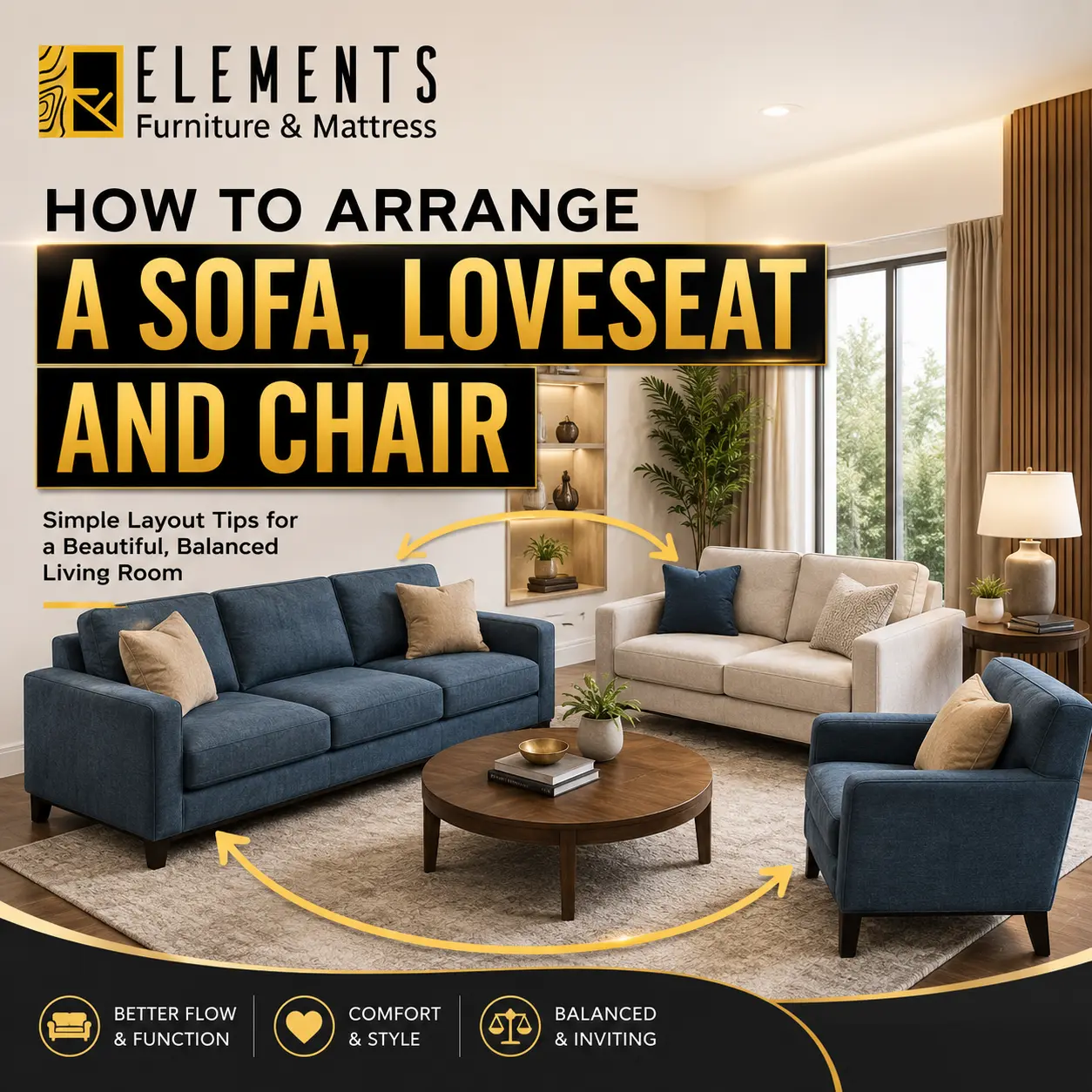
How to Arrange a Sofa, Loveseat and Chair
A sofa, loveseat, and chair can make a living room feel comfortably complete – or make it feel like every seat was pushed against a wall without a plan. Knowing how to arrange a sofa, loveseat and chair starts with one simple goal: create a conversation area people want to use, while leaving enough room to walk through the space easily.
You do not need a large home or a designer-level budget to make it work. A few thoughtful measurements, the right focal point, and furniture scaled to your room can turn three separate pieces into a polished, relaxing setup.
Start With the Room, Not the Furniture
Before moving a single piece, look at how your living room functions. Where do people enter? Is there a hallway, dining area, patio door, or kitchen path cutting through the room? Those routes need to stay clear. A beautiful layout is not very comfortable if everyone has to squeeze around the coffee table to reach the sofa.
Measure the length and width of the room, then mark door swings, windows, vents, and outlets. It is also smart to measure your sofa, loveseat, and chair before shopping or rearranging. Many rooms feel crowded not because they have too much furniture, but because the seating is too deep, too wide, or positioned too close together.
As a practical rule, leave about 30 to 36 inches for main walkways. Around a coffee table, aim for roughly 16 to 18 inches between the table and sofa. This gives guests enough legroom while keeping drinks, remotes, and snacks within easy reach.
Choose a Focal Point First
Every successful seating arrangement has something that visually anchors it. In many homes, that is a TV wall, fireplace, large window, or statement rug. Your sofa is usually the largest piece, so it often faces this focal point and sets the direction for the entire layout.
If your TV is the priority, place the sofa across from it when possible. If you are designing around a fireplace, let the sofa face the fireplace and arrange the loveseat and chair to support conversation. In a room with a great view, orient at least part of the seating toward the windows without blocking natural light.
When there is no obvious focal point, create one. A large rug, media console, gallery wall, or tall floor lamp can give the seating area a clear center. This is especially helpful in open-concept homes, where a living room needs to feel defined without actual walls.
How to Arrange a Sofa, Loveseat and Chair for Conversation
The most reliable setup is a loose U-shape. Place the sofa as the main anchor, then position the loveseat and chair on nearby sides, facing inward. This gives everyone a view of one another and prevents the room from feeling like a waiting area.
The classic U-shaped arrangement
Set the sofa facing the focal point. Place the loveseat at a right angle on one side, and place the chair at a right angle or slight angle on the other side. The pieces do not have to form a perfect square. In fact, a little asymmetry often makes a room feel more relaxed and natural.
This arrangement works well in square or larger rectangular rooms. It also gives you flexibility: the chair can angle toward the sofa for a softer look, while the loveseat can sit straighter to define the edge of the seating area.
The L-shaped arrangement with a floating chair
For a narrower room, place the sofa and loveseat in an L-shape. Then position the chair opposite the loveseat, angled toward the center. This keeps the room open while still creating a clear place to sit and talk.
A floating chair is particularly useful near a window or corner. It can fill empty space without making the room feel boxed in. Pair it with a small side table and lamp, and it also becomes a comfortable reading spot when the room is not full of guests.
The face-to-face setup
If conversation matters more than television viewing, place the sofa and loveseat facing each other with a coffee table between them. Set the chair at one open end, angled inward. This layout feels inviting for family gatherings, game nights, and visiting with friends.
The trade-off is that a face-to-face setup can be harder to align with a TV. If the television is off to the side, choose a swivel chair so one seat can easily turn toward the screen when needed.
Pull Seating Away From the Walls When You Can
Pushing every piece against the wall may seem like the easiest way to create space, but it can actually make a room feel disconnected. When the room is large enough, pull the sofa and loveseat a few inches or even a couple of feet away from the walls. That small change creates a more intentional, high-end look.
In an open floor plan, floating the sofa can work even better. Use its back to separate the living room from a dining area or kitchen. A slim console table behind the sofa adds a finished look and gives you a spot for lamps, books, or a decorative tray.
Small rooms are the exception. If your living room is tight, placing the sofa closer to a wall may be the right call. Just avoid lining up all three pieces flat against three different walls. Angle the chair inward, bring the coffee table close enough to use, and use a rug to visually connect the group.
Use a Rug to Make Three Pieces Feel Like One Set
A rug does more than add color and softness. It tells the eye that the sofa, loveseat, and chair belong together. Choose a rug large enough for at least the front legs of every seating piece to rest on it. Ideally, all four legs fit on the rug in a larger room.
A rug that is too small can make even stylish furniture look scattered. When in doubt, size up. A larger rug usually makes a living room look more spacious because it creates a stronger, cleaner furniture zone.
Keep the colors practical and coordinated. If your sofa is a neutral gray, beige, or cream, a patterned rug can bring in personality. If your seating already has bold fabric or texture, a solid or subtly patterned rug may give the room the balance it needs.
Balance the Visual Weight
Your sofa will naturally carry the most visual weight, especially if it has a high back, dark upholstery, or wide arms. The loveseat and chair should balance it without trying to match it exactly.
Matching all three pieces creates a coordinated look that is easy to shop and style. Mixing pieces can feel more collected, but it works best when there is a connecting detail, such as similar leg finishes, fabric tones, or a shared modern, traditional, or transitional style.
Pay attention to height, too. A low-profile accent chair beside a tall, overstuffed loveseat can look out of place unless another element bridges the difference, such as a tall lamp, larger artwork, or a substantial side table. The goal is not perfect symmetry. It is a room that feels evenly weighted from every angle.
Add Tables and Lighting Where People Actually Sit
Every seat needs a nearby surface. A coffee table handles the center of the room, but side tables make the layout more useful. Place one beside the chair, at the end of the sofa, or between the sofa and loveseat if there is enough space. Guests should not have to stand up to set down a drink.
Lighting matters just as much. A floor lamp beside the chair creates a cozy corner, while table lamps near the sofa make evening conversations feel warmer. If you have overhead lighting, use it as general light rather than the only light source. Layered lighting makes affordable furniture look more polished and makes the room feel more comfortable after dark.
Finish with pillows and a throw, but do not overload the seating. Two or three pillows on a sofa, one or two on a loveseat, and a simple lumbar pillow or throw on the chair is usually plenty. You want the furniture to look inviting, not like guests need to remove decorations before sitting down.
Make the Layout Work for Your Everyday Life
The best arrangement depends on how you live. Families with young children may want more open floor space and rounded coffee table edges. Apartment dwellers may need a compact loveseat, an armless chair, or a storage ottoman instead of a large coffee table. If you host often, prioritize seats that face each other and leave a clear route through the room.
Try the layout for a few days before deciding it is final. Sit in each seat. Watch TV, carry in groceries, open doors, and notice where people naturally walk. Small adjustments – moving a chair six inches, turning the loveseat slightly, or choosing a slimmer side table – can make a major difference.
At Elements Home Furnishings, you can build a living room around the way your household relaxes, not around a one-size-fits-all layout. Choose comfortable seating with the scale, style, and value that fit your home, then give each piece room to do its job: make everyday downtime feel better.