Currently Empty: $0.00

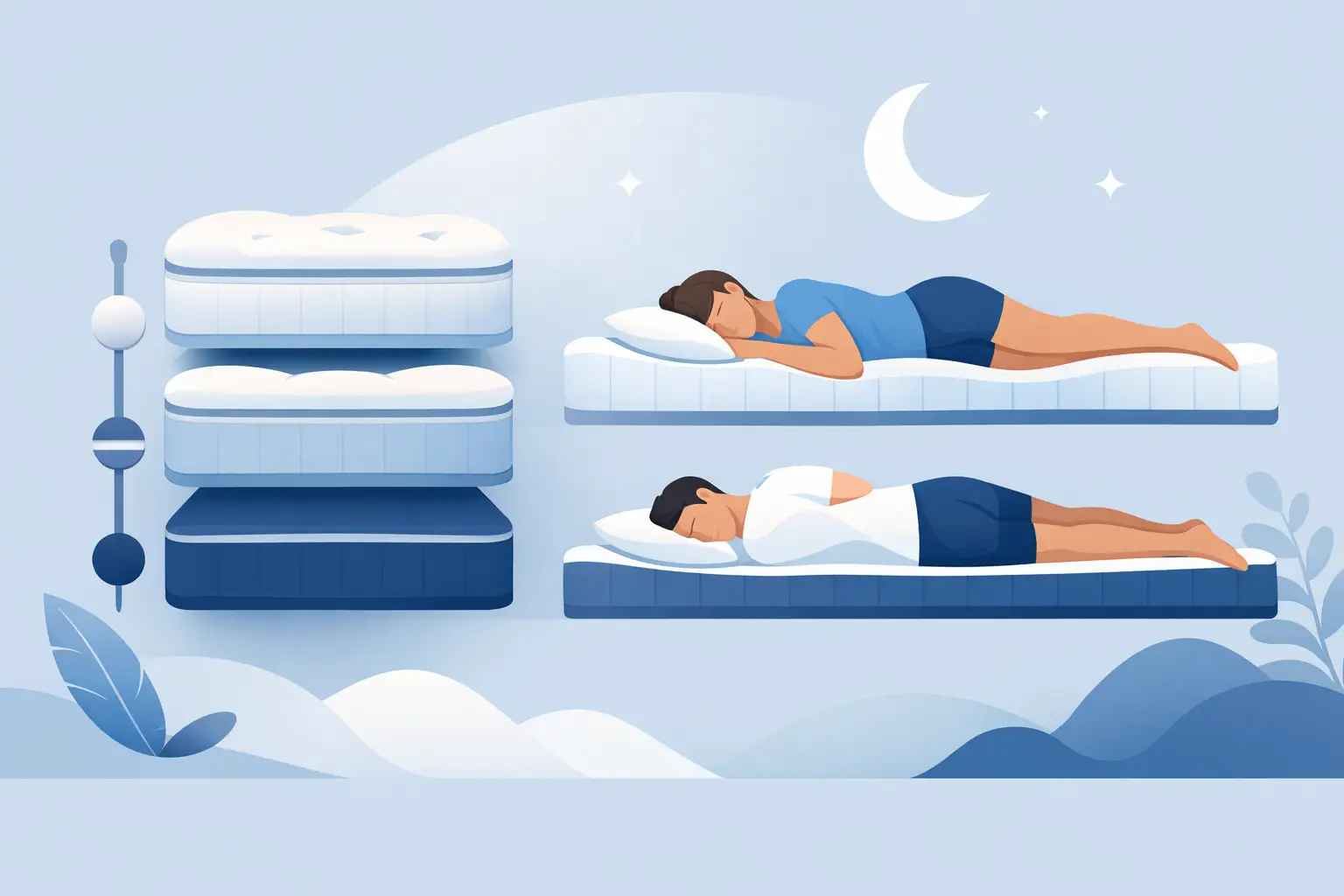
A mattress can look perfect in your bedroom and still leave you waking up stiff, sore, or ready to move to the couch by 3 a.m. This mattress firmness guide makes the choice simpler: find the level of support and cushioning that fits how you sleep, how your body feels, and who shares the bed with you.
Firmness is one of the fastest ways to narrow a mattress selection, but it is not a one-size-fits-all decision. A plush mattress can feel wonderfully cozy to one sleeper and unsupportive to another. A firm mattress may keep one person comfortable all night while creating pressure points for someone else. The right feel comes down to your sleep position, body type, comfort preferences, and the mattress materials beneath the cover.
What Mattress Firmness Really Means
Mattress firmness describes how soft or firm a bed feels when you lie on it. Most mattresses are rated on a 1 to 10 scale, with 1 being exceptionally soft and 10 being very firm. In everyday shopping, you will usually see options described as soft, medium-soft, medium, medium-firm, or firm.
Firmness is not the same as support. A soft mattress can still be supportive when it has a strong core that keeps your spine aligned. Likewise, a firm bed is not automatically better for your back if it does not provide enough pressure relief around your shoulders, hips, and lower back.
Think of firmness as the first impression of the mattress. Support is what keeps your body in a comfortable, healthy position through the night. The best choice offers both.
Mattress Firmness Guide: The Feel of Each Level
Soft: Plush cushioning with deeper sink
Soft mattresses generally fall around a 3 to 4 on the firmness scale. They allow your body to settle farther into the comfort layers, creating a cushioned, cradled feel. This can be a great match for side sleepers, especially lighter-weight sleepers, because it helps relieve pressure on the shoulder and hip.
The trade-off is that some stomach sleepers and back sleepers may sink too far through the midsection. If your hips dip below the rest of your body, your spine can fall out of alignment. Soft beds are also less likely to be the easy compromise for couples with very different needs.
Medium-soft: A cozy feel with more balance
Medium-soft mattresses usually rate around a 4 to 5. They offer noticeable contouring without the deep sink of a truly plush bed. This is a popular choice for sleepers who want a softer surface but still need a little more lift and stability.
If you sleep mostly on your side but change positions during the night, medium-soft can feel more versatile than a soft mattress. It can also suit lighter back sleepers who find medium or firm beds too unyielding.
Medium: A flexible choice for combination sleepers
Medium mattresses land near a 5 to 6 on the scale. They balance cushioning and support, which makes them one of the most broadly appealing choices for guest rooms, couples, and combination sleepers.
A medium feel gives side sleepers some pressure relief while offering enough resistance for many back sleepers. It may not be plush enough for someone who loves a sink-in feel, and it may not be firm enough for a heavier stomach sleeper. Still, it is a practical middle ground when you need a mattress that works well for more than one person.
Medium-firm: Supportive without feeling hard
Medium-firm mattresses typically rate around a 6 to 7. They have a flatter, more supportive surface with moderate cushioning on top. For many adults, this is the sweet spot between comfort and stability.
Medium-firm is often a strong option for back sleepers because it helps keep the hips from dropping too low. It also works well for combination sleepers who need to move easily instead of feeling wrapped into the mattress. Many couples choose this level because it can accommodate a range of sleeping styles without feeling overly stiff.
Firm: Minimal sink and a steady sleep surface
Firm mattresses generally rate around a 7 to 8. They let you sleep more on top of the bed than in it, with less contouring and a stronger sense of pushback. Stomach sleepers and larger-bodied sleepers often appreciate this feel because it can keep the midsection from sinking excessively.
Firm is not always the best answer for back pain or better posture. A very firm surface can put too much pressure on the shoulders and hips, particularly for side sleepers. If you like stable support but want a touch more comfort, a medium-firm mattress with a plush topper may be a better fit.
Match Firmness to Your Sleep Position
Your usual sleep position is one of the most useful clues when mattress shopping. It tells you where your body needs pressure relief and where it needs extra support.
Side sleepers usually do best with soft to medium firmness. The shoulder and hip press into the mattress, so cushioning matters. A mattress that is too firm can create numbness, soreness, or frequent tossing and turning.
Back sleepers often prefer medium to medium-firm options. The goal is to support the natural curve of the lower back without allowing the hips to sink. If you wake up with tightness through your lower back, your current mattress may be too soft or worn down.
Stomach sleepers commonly need medium-firm to firm support. This helps keep the pelvis level with the rest of the body. A mattress that feels wonderfully soft at first can become uncomfortable for stomach sleepers if it allows the lower back to arch.
Combination sleepers should look for medium to medium-firm mattresses with responsive materials. You want enough cushioning for side sleeping, along with enough support to change positions without feeling stuck.
Body Weight and Mattress Feel Can Change the Answer
The same mattress can feel different from person to person. Lighter-weight sleepers may experience a mattress as firmer because they do not compress the comfort layers as deeply. A medium mattress may feel supportive and comfortable, while a firm option may feel too hard.
Average-weight sleepers often find that published firmness ratings match their real experience fairly closely. This is why medium and medium-firm mattresses are common starting points.
Heavier sleepers may press more deeply into the mattress and experience it as softer. A medium-firm or firm mattress can provide better stability, especially for back and stomach sleeping. Look for a durable support system as well as the right firmness level, since long-term comfort depends on how well the mattress holds its shape.
Material Matters as Much as the Firmness Label
Two medium-firm mattresses can feel completely different. Materials influence how quickly a bed responds, how much it contours, and how warm or cool it feels.
Memory foam is known for close contouring and pressure relief. It can make a medium mattress feel more enveloping, which side sleepers may love. Some sleepers prefer the slower response, while others want a surface that is easier to move around on.
Innerspring mattresses tend to feel more buoyant and responsive. They often have a traditional, lifted feel and stronger edge support, which can be especially helpful if you sit on the side of the bed or share it with a partner.
Hybrid mattresses combine foam comfort layers with a coil support system. They are a popular choice for shoppers who want pressure relief without losing the responsive feel of springs. Latex mattresses generally feel springy, supportive, and less sink-in than memory foam.
When comparing options, do not rely on the word “medium” alone. Consider whether you want contouring, bounce, cooling features, edge support, or easy movement across the surface.
How to Choose When You Share a Bed
Couples do not need identical sleep habits to find a comfortable mattress, but they do need a smart compromise. If one person is a side sleeper and the other sleeps on their stomach, medium-firm is often a sensible starting point. It offers enough support for the stomach sleeper while providing more cushioning than a fully firm bed.
Motion transfer matters, too. If one partner gets up early or changes positions often, foam and many hybrid designs can help reduce the movement you feel on your side of the bed. Edge support is worth considering for couples who use the full sleep surface or prefer sitting on the edge while getting ready.
For very different comfort preferences, a split mattress setup or adjustable foundation can make the bedroom work harder for both people. Each sleeper can create a more personalized position without giving up the convenience of a shared bed.
Signs Your Mattress Firmness Is Not Working
Your body often gives you a clearer answer than a product label. Persistent shoulder or hip pressure may mean your mattress is too firm, especially if you sleep on your side. Lower-back discomfort can point to a mattress that is too soft, though sleeping posture and pillow support can also play a role.
Frequent repositioning, waking up tired, or rolling toward the center of the bed are also worth paying attention to. A mattress that has visible sagging or has lost its support may need replacing even if its original firmness was right for you.
Before buying, consider your full sleep setup. A supportive pillow, the right bed frame, and a stable foundation all affect how a mattress performs. An adjustable foundation can also add comfort for readers, snorers, and anyone who enjoys elevating their head or feet.
Choosing the right mattress should feel less like a guessing game and more like a comfort upgrade for your everyday life. Start with your sleep position, choose the firmness range that supports it, and trust the feel that helps you relax. At Elements Home Furnishings, you can bring that better-rest feeling home with stylish, affordable bedroom essentials built for the way you live.