Currently Empty: $0.00

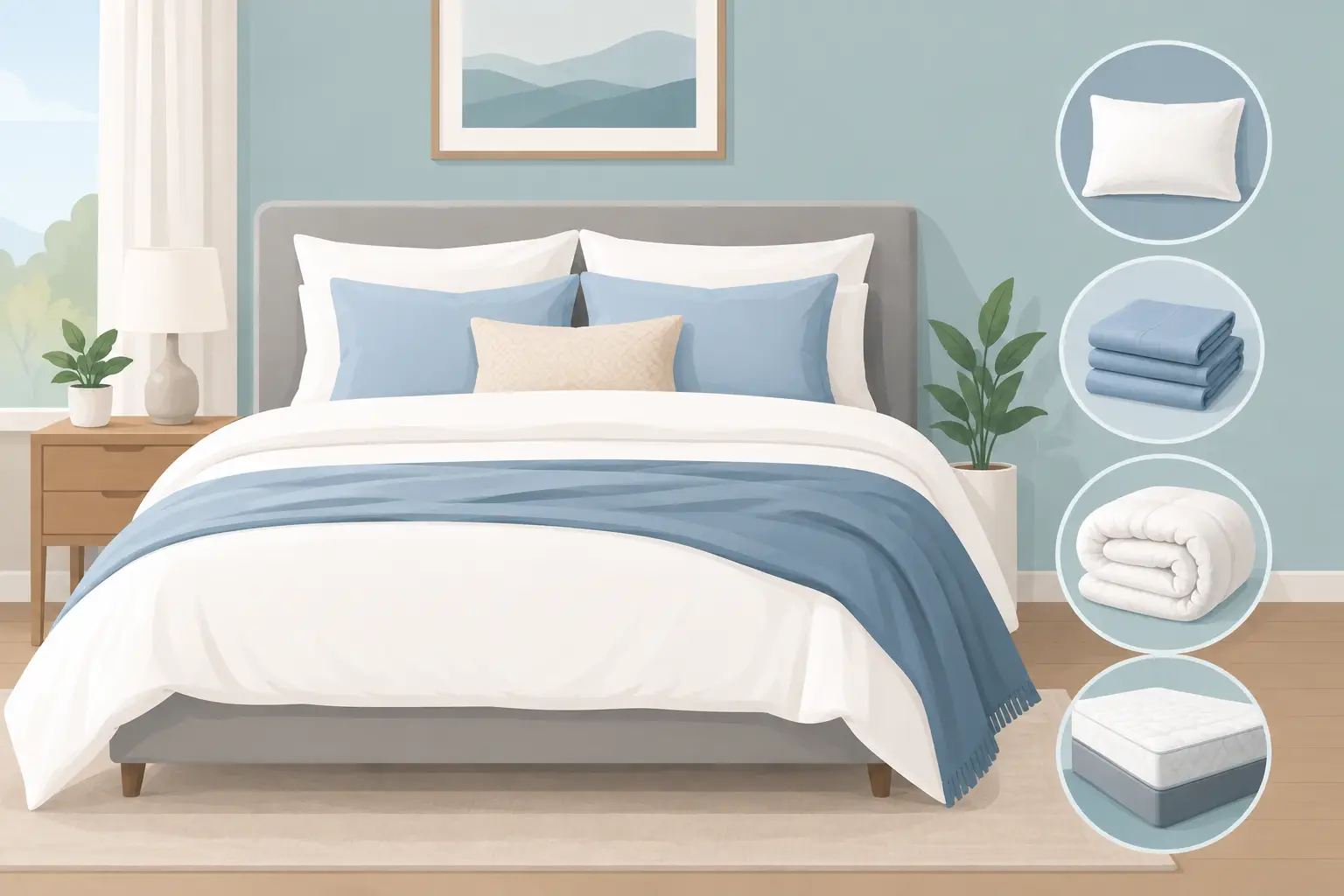
A great mattress and bed frame deserve more than whatever sheets happened to be on sale. The right layers can make a familiar bed feel cooler, softer, cozier, or more pulled together without replacing the furniture underneath. This bedding essentials guide breaks down what belongs on your bed, how each piece works, and where it makes sense to spend a little more for comfort you will notice every night.
Start With the Bed You Have
Before choosing colors or fabrics, confirm your mattress size and depth. Twin, full, queen, king, and California king bedding are not interchangeable, and deep-pocket fitted sheets matter if your mattress has a pillow top, topper, or adjustable base. Measure the mattress height if you are unsure. A sheet that is too shallow will pop off at the corners, while an oversized fitted sheet can bunch beneath you.
Think about how you actually sleep, too. Hot sleepers usually prefer breathable sheets and lighter layers. Anyone who runs cold may want a quilt plus a comforter, or a thicker blanket that can stay on the bed most of the year. For a guest room, easy-care materials and versatile neutral colors often make the most sense. For a kid’s room, durability and washable fabrics are usually the priority.
Your bed frame also affects the finished look. A tall upholstered headboard can handle fuller pillows and a generously sized comforter. A streamlined platform bed often looks best with cleaner layers and less bulk. There is no single correct formula – the goal is a bed that feels comfortable to sleep in and looks intentional when it is made.
Bedding Essentials Guide: Build the Everyday Layers
Most comfortable, functional beds begin with a few core pieces: a mattress protector, sheets, pillows, a primary warm layer, and a light extra layer. Decorative accents come after those basics.
Add a Mattress Protector First
A mattress protector is the quiet workhorse of the bed. It creates a washable barrier against spills, sweat, and everyday wear, helping keep the mattress fresher over time. This is especially useful in kids’ rooms, guest rooms, and homes with pets.
Look for one that fits the mattress depth and has secure elasticized corners. Waterproof does not have to mean noisy or stiff. Many modern protectors are made to feel soft while still providing practical protection. If temperature is a concern, choose a breathable option rather than a heavily padded cover that may hold extra heat.
Choose Sheets for Feel, Not Just Thread Count
Thread count gets plenty of attention, but it is not the only sign of comfortable sheets. Fiber type, weave, and finish have a bigger effect on how sheets feel night after night.
Cotton is a familiar choice because it is breathable, soft, and easy to use year-round. Percale cotton has a crisp, cool feel that appeals to many warm sleepers. Sateen is smoother with a subtle sheen and tends to feel warmer and silkier. Linen has a relaxed texture and becomes softer with use, but its naturally rumpled look is part of the appeal. Microfiber can be an affordable, soft option for guest beds or busy households, though it may not feel as airy as natural fibers.
A dependable sheet set includes a fitted sheet, flat sheet, and pillowcases. If you like the hotel-style tuck of a flat sheet, keep it in the rotation. If you find it twists around your feet every night, skip it. Bedding should make bedtime easier, not add a layer you immediately kick to the floor.
Pick Pillows Based on Sleep Position
The best pillow is less about appearance and more about keeping your neck supported. Side sleepers typically need a higher-loft pillow to fill the space between the shoulder and head. Back sleepers often do well with medium support. Stomach sleepers generally need a soft, low-loft pillow, or no pillow at all, to avoid tipping the neck upward.
Pillow fill changes the experience. Down and down-alternative pillows feel plush and moldable. Memory foam offers more structured support, while latex tends to feel responsive and naturally springy. Couples do not have to use the same pillow type. Choosing a pillow that fits each person’s sleep style can make more difference than matching every item on the bed.
Use pillow protectors under pillowcases to help extend the life of your pillows. Decorative shams can sit in front during the day, but they do not need to become part of your nightly sleep setup.
Select Your Main Warm Layer
A comforter, duvet, quilt, or coverlet usually becomes the visual center of the bed. The best choice depends on your climate, thermostat habits, and preferred look.
A comforter is easy and familiar: one finished piece that is ready to spread over the bed. A duvet combines an insert with a removable cover, which makes changing the color or washing the outer layer more convenient. Quilts offer lighter warmth and texture, making them a smart choice for warm climates or layered beds. Coverlets are typically thinner and more tailored, so they work well for a neat, modern look.
Pay attention to size as well as mattress dimensions. A comforter that barely reaches the sides can make even a beautiful bed look undersized. If your bed is tall, your mattress is extra deep, or you prefer more coverage, sizing up may give you the drape you want. Just make sure a larger option will still fit comfortably in your washer and dryer, or plan for occasional professional cleaning.
Layer for Comfort Through Every Season
The most inviting beds have adjustable warmth. Rather than relying on one heavy piece all year, build a setup that lets you add or remove layers as temperatures change.
Start with your sheets, then add a light blanket, quilt, or coverlet. Finish with a comforter or duvet when you need more warmth. This approach gives you options on nights when the room feels cooler than expected, and it keeps the bed from becoming overly hot in spring and summer.
For a simple, polished look, choose a main color for the comforter or quilt and bring in contrast through a throw blanket or accent pillows. Soft neutrals such as ivory, gray, taupe, and navy are easy to refresh with seasonal color. If your bedroom furniture makes a statement, calmer bedding can balance the room. If the furniture is clean-lined and neutral, patterned bedding can add personality without requiring a full room makeover.
Make the Bed Look Finished Without Overbuying
You do not need a pile of decorative pillows to create a comfortable, styled bedroom. Begin with the pillows you sleep on, then add two shams if you want extra height and a more finished headboard view. One lumbar pillow or a folded throw at the foot of the bed is often enough.
Scale matters. King beds can handle larger Euro shams or a wider lumbar pillow, while a full-size bed may feel crowded with too many oversized accents. In smaller bedrooms, keeping bedding simple can make the entire space feel calmer and less cluttered.
If you are furnishing a first apartment or replacing several bedroom basics at once, spend first on the items that touch your body every night: a supportive pillow, well-fitting sheets, and a warm layer suited to your home. Decorative extras can come later. A coordinated set is nice, but practical comfort is what makes a bedroom worth coming home to.
Care Habits That Help Bedding Last
Wash sheets and pillowcases regularly, following the care label for water temperature and drying instructions. Rotating between two sheet sets gives you a clean backup while the other set is in the laundry and reduces wear on both. Duvet covers and quilts may not need washing as often as sheets, but they should be cleaned promptly after spills or during seasonal refreshes.
Avoid using more detergent than needed. Residue can make fabric feel stiff and reduce the softness you bought the bedding for. Before storing seasonal comforters or blankets, make sure they are fully clean and dry. A breathable storage bag or clean linen closet is better than sealing slightly damp bedding in plastic.
A well-made bed is not about creating a showroom you are afraid to disturb. It is about choosing layers that support your sleep, fit your routine, and make your bedroom feel like your space. Whether you are setting up a new home or refreshing a room one piece at a time, comfortable, stylish bedding is one of the simplest ways to make every night feel better.