Currently Empty: $0.00

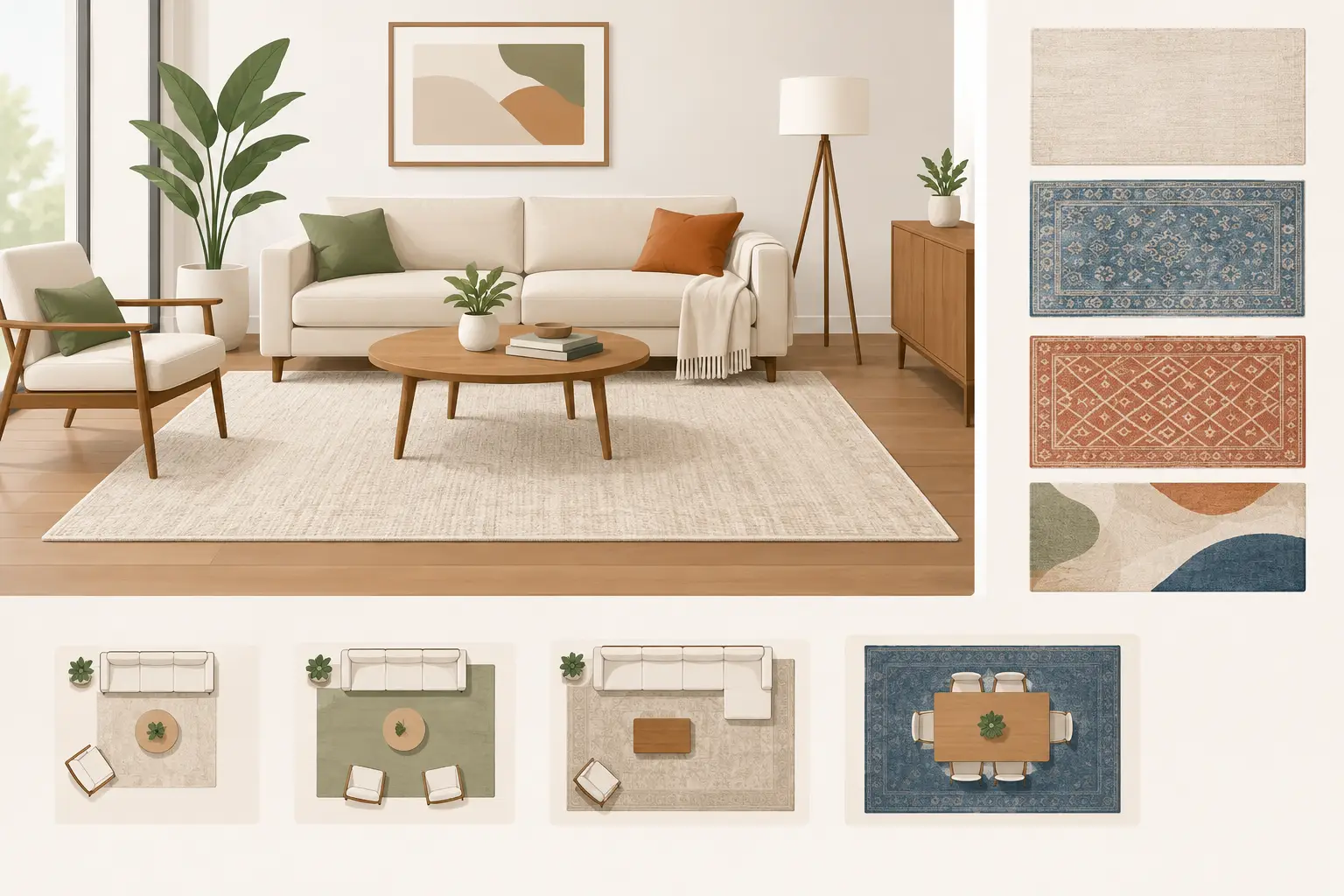
A room can have a comfortable sofa, a great bed, or a beautiful dining set and still feel unfinished. Often, the missing piece is right underfoot. Area rugs define a space, add warmth, soften hard flooring, and bring furniture, color, and texture together without requiring a full room makeover.
For apartments, family homes, and first-time furnishing projects alike, the best rug is not always the most expensive one. It is the one that fits your room, supports your everyday routine, and gives your furniture a finished, intentional look.
Start With Area Rug Size, Not Color
It is tempting to pick a rug based on a favorite pattern or the perfect shade of blue. Size should come first. A rug that is too small can make even a well-furnished room feel disconnected, while the right size helps the entire room feel larger and more balanced.
Before shopping, measure your seating area, bed, or dining table. Then think about where the rug should sit in relation to the furniture. You do not need every piece to be completely on the rug, but the placement should look purposeful.
Living room rug sizing
In most living rooms, a rug should be large enough to reach under the front legs of the sofa and chairs. This creates one cohesive conversation area instead of making the furniture look like it is floating around the room. An 8-by-10 rug is a popular choice for an average living room, while a 9-by-12 option often works better in larger spaces or open floor plans.
A smaller rug can still work in a compact apartment or under a coffee table, especially when space and budget are limited. Just make sure it visually connects the main seating pieces. If only the coffee table fits on the rug and the sofa sits far away, the room may feel less pulled together.
Bedroom rug sizing
A bedroom rug should feel soft where your feet land in the morning. For a queen or king bed, place a large rug horizontally beneath the bed, extending beyond both sides and the foot. This creates a cozy foundation for the whole room.
If a full-size rug is not the right fit for your layout, two matching runners on each side of the bed are a practical alternative. They add comfort without covering most of the floor, which can be especially helpful in smaller bedrooms.
Dining room rug sizing
Dining room rugs need extra room around the table. Pull out your dining chairs and measure from there. Ideally, chairs should stay on the rug when someone sits down. This prevents chair legs from catching on the rug edge and makes the space easier to use every day.
For round tables, a round rug can look especially polished. For rectangular tables, a rectangular rug is usually the simplest and most balanced choice.
Choose a Rug Material for Real Life
The best material depends on where the rug will live and who lives with you. A high-traffic entryway, a busy family room, and a quiet guest bedroom all have different needs.
Synthetic materials such as polypropylene and polyester are popular for everyday spaces because they are often budget-friendly, soft, and easier to clean. They are a smart option for homes with kids, pets, or frequent entertaining. Many also hold up well against fading, making them useful in sunny rooms.
Natural fibers bring a different look and feel. Wool rugs are known for softness, durability, and natural texture, but they can cost more and may need more careful cleaning. Jute and sisal rugs offer an easy, casual style that works beautifully with modern, coastal, farmhouse, or boho-inspired spaces. Their textured surface adds character, though they may feel less soft under bare feet.
Low-pile rugs are usually the easiest choice for dining rooms, hallways, and other high-use areas. Chairs slide more easily over them, doors are less likely to catch, and vacuuming is simpler. Plush or high-pile rugs feel especially comfortable in bedrooms and relaxed living rooms, but they can hold onto crumbs, pet hair, and dust more easily.
Pick Color and Pattern That Work With Your Furniture
Your rug does not need to match everything in the room. In fact, a little contrast can make the space more interesting. The goal is to create a coordinated look, not a room where every surface is the same color.
If your sofa and main furniture are neutral, an area rug is an easy place to introduce color or a bold pattern. Rich blues, warm rust tones, soft greens, and layered neutrals can add personality without asking you to replace your larger furniture pieces. A patterned rug is also forgiving in a busy home because it can hide minor everyday marks better than a solid light color.
If your furniture already has bold color, detailed upholstery, or dramatic artwork nearby, a neutral rug can help the room breathe. Cream, gray, beige, tan, and soft charcoal options can add texture without competing for attention.
When choosing a pattern, consider the scale of the room. Large, open spaces can handle bigger patterns and stronger contrast. In a small room, a subtle design or lighter color can keep the floor from feeling visually crowded. That said, a small room does not have to be boring. One well-chosen patterned rug can make a compact space feel designed rather than temporary.
Match the Rug Shape to the Room
Rectangular rugs are the most versatile choice and work in nearly every room. They pair naturally with sofas, beds, dining tables, and long hallways. But other shapes can solve layout challenges or give a room a more custom feel.
Round rugs soften rooms with lots of straight lines, such as a dining area with a round table or a bedroom with a curved accent chair. They can also make a small reading corner feel inviting. Runner rugs are ideal for hallways, kitchens, narrow entryways, and each side of the bed.
Layering can be a useful option when you love the look of a smaller statement rug but need more coverage. Start with a larger neutral base, then add a patterned or textured rug on top. This approach adds depth and lets you bring in more personality without purchasing an oversized patterned rug.
Do Not Forget Rug Pads and Everyday Care
A rug pad is a small addition that makes a noticeable difference. It helps reduce slipping, adds cushioning, protects the flooring underneath, and can help the rug hold its shape. It is especially helpful on hardwood, laminate, tile, and other smooth surfaces.
For routine care, vacuum according to the rug’s pile and material. Rotate the rug every few months so sunlight and foot traffic wear it more evenly. Treat spills quickly by blotting rather than rubbing, which can push a stain deeper into the fibers. Always follow the care instructions for your specific rug, particularly with wool, natural fiber, or specialty materials.
Make Every Room Feel More Complete
Area rugs do more than cover a floor. They create a comfortable landing spot in a bedroom, make a living room feel ready for guests, and give a dining area the finished look of a complete home. With the right size, material, and style, a rug can refresh a room without stretching your furnishing budget.
Whether you are styling a first apartment or updating the family room, choose the rug that suits the way you live. At Elements Home Furnishings, finding a stylish, affordable piece for every room can be the simple finishing touch that makes your space feel like home.