Currently Empty: $0.00

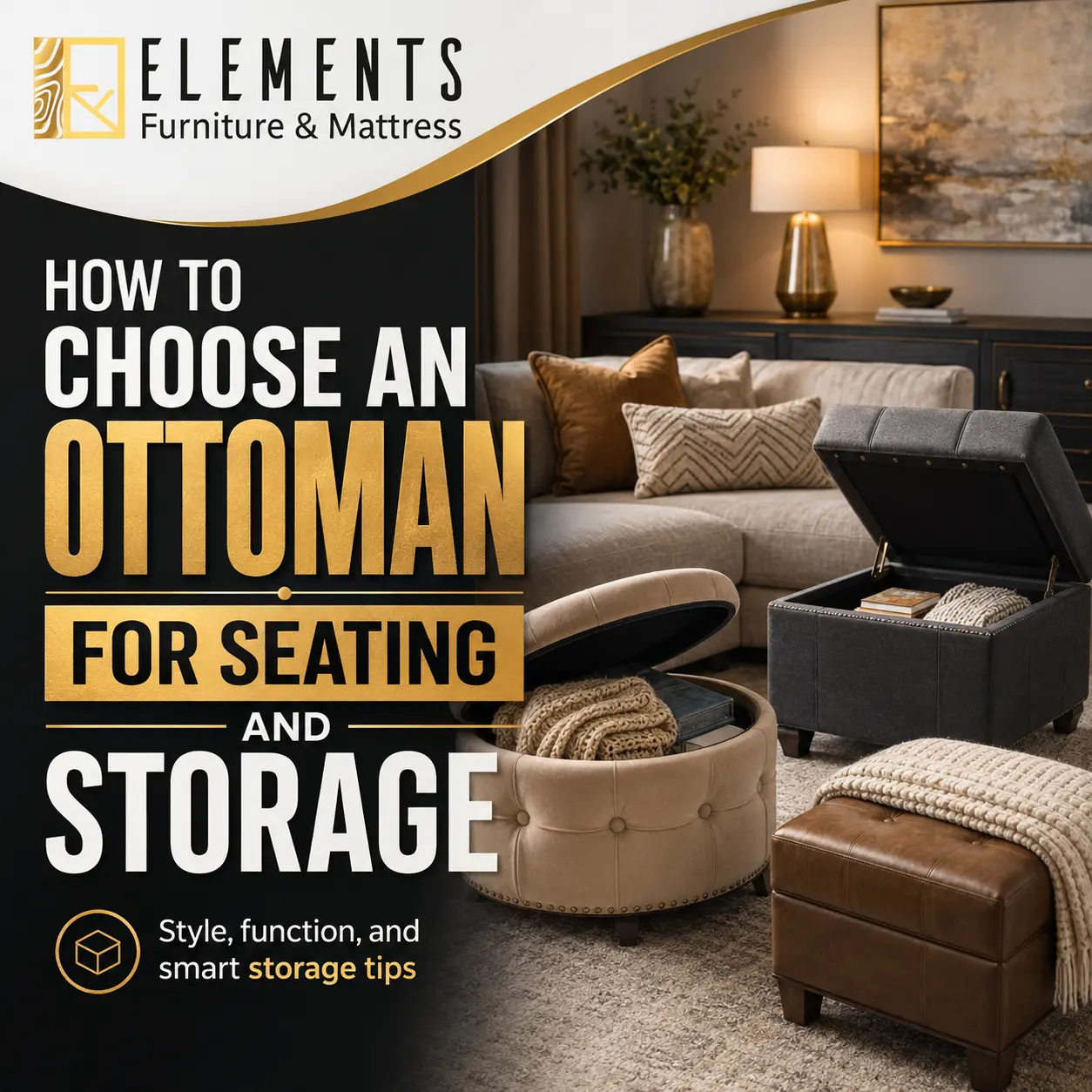
How to Choose an Ottoman for Seating and Storage
A good ottoman earns its floor space. It can give guests an extra place to sit, hide everyday clutter, soften a living room layout, and even stand in for a coffee table. The key to how to choose an ottoman for seating and storage is not simply picking the prettiest upholstery. You need a piece that fits the way your household actually relaxes, gathers, and puts things away.
For a first apartment, a busy family room, or a bedroom that needs more function without more furniture, an ottoman can be one of the smartest upgrades you make. Start with the room, then match the size, construction, storage style, and finish to your needs.
Start With the Ottoman’s Main Job
Ottomans come in many styles because they solve different problems. Before comparing colors and fabrics, decide what you want yours to do most often. If it will mainly be a footrest in front of a sectional, comfort and height matter most. If it will become a backup seat when friends visit, choose a firm, supportive top. If toys, blankets, remotes, or extra pillows are taking over the room, storage capacity should lead the decision.
Many homes need more than one function, and that is where a storage ottoman shines. A padded, lift-top design can provide seating when you need it and keep everyday items out of sight when you do not. Still, there is a trade-off: a deeply cushioned lid may be comfortable for feet but less stable for a tray of drinks, while a firmer top is more practical as a table surface.
Think about who will use it, too. A household with small children may value soft edges and easy-access storage. In a polished living room used mostly for entertaining, a tailored upholstered bench or tufted cocktail ottoman may deliver the more elevated look you want.
Measure the Room Before You Shop
An ottoman should make a room feel easier to use, not harder to walk through. Measure the open area between your seating and note the pathways to doors, hallways, and other rooms. In most living rooms, leave about 16 to 18 inches between the sofa and ottoman. That distance is close enough to rest your feet comfortably while giving everyone room to move around it.
For a standard sofa, a large rectangular ottoman often looks best when it is about two-thirds the sofa’s length. With an L-shaped sectional, a square or oversized rectangular option can anchor the center of the seating area. In a smaller apartment or narrow room, a compact round ottoman, a pair of smaller ottomans, or a slim storage bench can provide flexibility without crowding the layout.
Height matters just as much as width. Aim for an ottoman that is the same height as your seat cushions or one to two inches lower. A piece that sits much higher can feel awkward as a footrest. One that is too low may disappear visually and will not be as comfortable for extra seating.
Choose a Shape That Works With Your Layout
Rectangular ottomans are a natural fit in front of long sofas and at the foot of a bed. They usually offer generous storage and can seat two people when built with a sturdy frame. Square ottomans work especially well with sectionals because they fill a wider central space and create a balanced focal point.
Round and oval shapes help soften rooms filled with straight-lined furniture. They are also a practical choice in tight spaces because there are no sharp corners to navigate. The downside is that round storage ottomans can hold less than a rectangular piece with the same overall footprint, and they are not always ideal for serving drinks or displaying decor.
How to Choose an Ottoman for Seating and Storage by Construction
When your ottoman will be used as a seat, do not judge it by softness alone. Look for a solid wood or engineered wood frame designed to support weight, along with dense foam padding that holds its shape. A loose, overly plush top may feel inviting at first but can sag faster and offer less stable seating.
For storage, open the lid before committing if you can. A hinged lid stays attached and is convenient for frequent access, but it needs clearance behind the ottoman to open fully. Removable lids are simple and can be easier to clean around, although you need a place to set the top down. Some models use a tray-style reversible lid, giving you a padded side for comfort and a firm surface for snacks, books, or a decorative arrangement.
Check the interior dimensions, not only the outside measurements. A large-looking ottoman may have thick padding or structural supports that reduce usable storage. Consider what you plan to keep inside. Throw blankets need depth, board games need width, and small media accessories may be better organized in baskets or storage bins within a larger compartment.
If children will regularly open the ottoman, look for safety hinges that close slowly and help prevent little fingers from getting caught. Sturdy feet, a secure lid, and a stable base are worth prioritizing in any high-traffic family space.
Pick an Upholstery That Fits Real Life
Fabric is where style meets daily wear. Linen-look upholstery and woven textures bring warmth and a relaxed feel to a living room, but lighter colors can show spills and marks sooner. Performance fabrics and tightly woven polyester blends are often easier to maintain for homes with kids, pets, or frequent movie nights.
Leather or faux leather gives an ottoman a clean, tailored look and is usually easy to wipe down. It can be a smart choice for a busy living room, though it may feel cooler to the touch and can show scratches depending on the finish. Velvet adds instant richness and works beautifully in a bedroom or a more formal sitting area, but it generally needs more careful upkeep.
Choose a color with the rest of the room in mind. A neutral ottoman in beige, gray, cream, or warm brown is easy to coordinate when you change rugs, pillows, and wall decor. A bold blue, green, or patterned ottoman can add personality to a neutral sofa, especially when you want an accent piece that makes the room feel more finished.
Tufting, nailhead trim, and decorative legs can bring character, but simpler designs are often more versatile over time. If your room already has a patterned rug, colorful artwork, and textured pillows, a clean-lined ottoman may create the visual breathing room the space needs.
Make Sure Storage Is Actually Useful
Hidden storage feels like a bonus until it becomes the place where everything gets tossed and nothing can be found. Choose a compartment that matches your organizing habits. Deep, open storage is excellent for blankets, seasonal pillows, and larger toys. Shallow compartments work better for books, remotes, charging cords, and smaller living room essentials.
In a bedroom, an upholstered storage bench at the foot of the bed can hold extra bedding while offering a convenient place to sit when getting dressed. In an entryway, a narrow storage ottoman can store shoes, scarves, or bags while giving everyone a place to sit before heading out the door.
If you need frequent access to what is inside, avoid placing a heavy tray, stacks of books, or large decor pieces on top. A lift-top ottoman is most convenient when the surface stays relatively clear. For rooms where the ottoman will double as a coffee table every day, a model with drawers, side cubbies, or a removable tray may be the better fit.
Consider One Large Ottoman or Two Smaller Ones
A single large ottoman creates a grounded, cohesive look and usually gives you the most storage in one place. It is a great option for a family room centered around a sectional or a spacious sofa. The limitation is flexibility. Moving one oversized piece can be difficult when you need extra floor space.
Two smaller ottomans offer a more adaptable setup. Push them together to create a coffee-table-like surface, separate them for individual footrests, or pull them out for guests. This choice works especially well in apartments, multipurpose rooms, and homes where furniture needs to work a little harder.
When comparing prices, focus on value rather than just the lowest number. A well-sized storage ottoman can replace the need for an extra side chair, blanket basket, and coffee table in a compact room. That makes it a stylish, affordable way to add comfort and organization at the same time.
The best ottoman is the one that makes your room feel more comfortable the moment you use it – then makes cleanup easier when the day is done. Choose a size you can move around, a fabric you can live with, and storage that supports your routine, and this simple accent piece can become one of the most useful seats in your home.