Currently Empty: $0.00

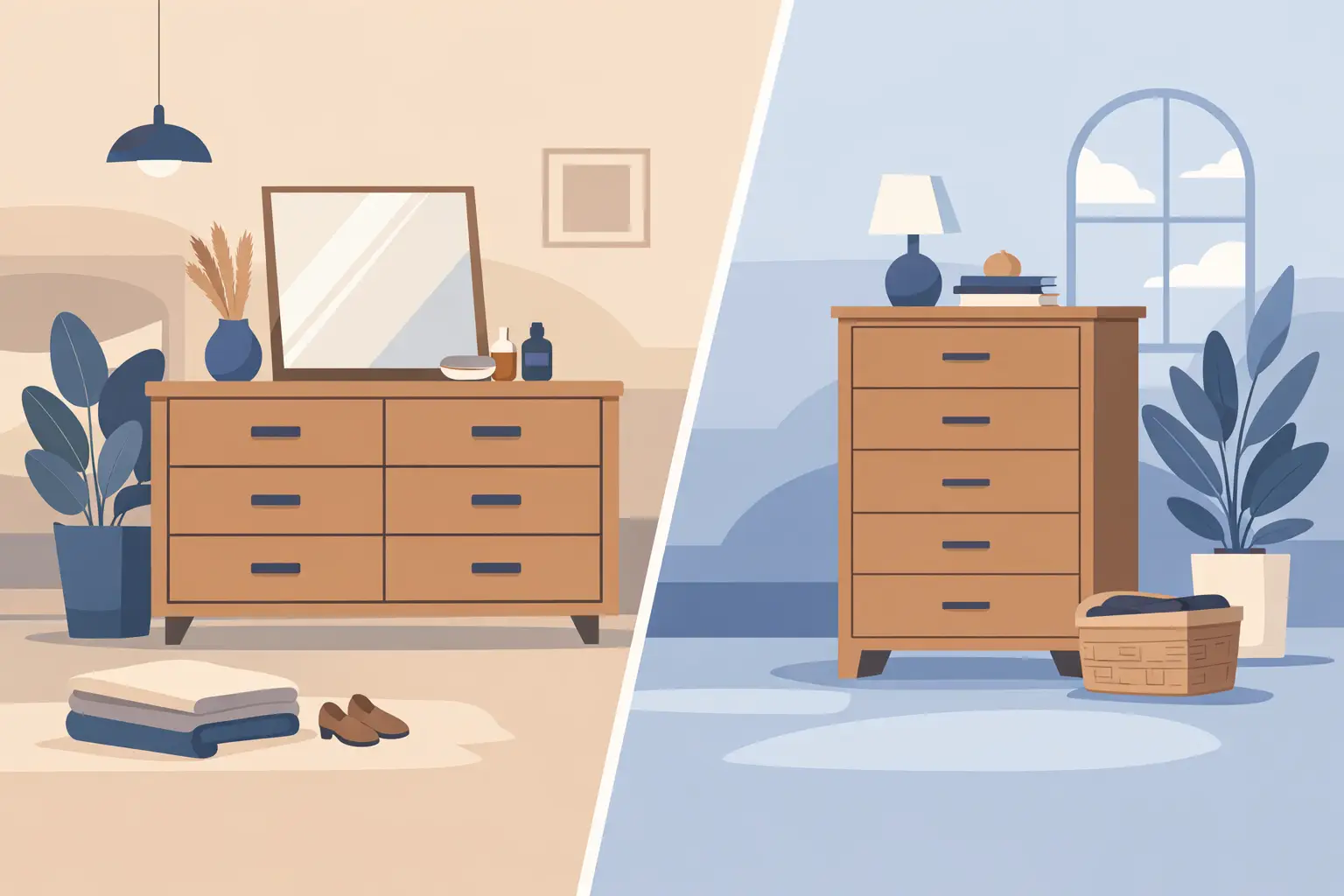
A bedroom can feel crowded fast when clothing has no clear home. In the dresser vs chest decision, the best choice usually comes down to your floor plan, the clothes you need to store, and how you want the room to function every morning. Both pieces add valuable drawer storage, but they do it in very different ways.
A dresser gives you a broad surface for getting ready, displaying a lamp, or holding a TV. A chest uses its height to store plenty of clothing while taking up less floor space. Once you understand the difference, it is much easier to choose a piece that looks right, works hard, and fits your budget.
Dresser vs Chest: The Main Difference
The simplest distinction is shape. A dresser is wide and relatively low, typically with two or three rows of drawers. A chest of drawers is tall and narrow, with drawers stacked vertically. You may also hear it called a drawer chest, tall chest, or lingerie chest, depending on its size and drawer layout.
That footprint changes the role each piece plays in your bedroom. A dresser becomes part of the room’s horizontal layout, often sitting along a longer wall or beneath a mirror. A chest makes use of vertical space, making it a smart answer for a tight wall, apartment bedroom, or kids’ room where every square foot matters.
Neither is automatically better. A wide primary bedroom with a larger wardrobe may need the drawer capacity and top surface of a dresser. A smaller room may feel more open with a chest that keeps storage off the floor without taking over the wall.
When a Dresser Is the Better Choice
Choose a dresser when you have room for a wider furniture piece and want storage that does more than hold clothes. Its top surface is one of its biggest benefits. Add a mirror to create a dedicated getting-ready spot, place a few framed photos or a tray for daily essentials, or use the surface for a television in a bedroom.
Dressers also make sorting easier for many households. Wider drawers are useful for folded jeans, sweaters, T-shirts, pajamas, workout clothes, and extra bedding. Parents often appreciate a dresser in a child’s room because it can hold a changing pad during the baby stage, then continue serving as everyday clothing storage as the child grows.
A dresser is especially practical when it anchors the bedroom visually. Pair it with matching nightstands and a bedframe for a coordinated set, or use a contrasting finish to create a focal point. Warm wood tones can bring a relaxed, classic look, while clean white, gray, or black finishes work well in modern spaces.
The trade-off is width. Before you shop, measure the wall and leave enough clearance to open drawers fully and walk comfortably through the room. A dresser that technically fits but blocks a doorway, closet, or walkway will make the bedroom less comfortable every day.
Best rooms for a dresser
A dresser is often the right fit for a primary bedroom, a larger guest room, or a shared bedroom with a long open wall. It also works well when a closet is limited but you need a broad range of drawer sizes. If you like having a place for décor and daily routines, the extra surface area can be worth the larger footprint.
When a Chest of Drawers Makes More Sense
A chest is built for small-space efficiency. It provides several drawers while occupying a narrow area of the floor, which can be a major advantage in apartments, condos, dorm-style rooms, and compact bedrooms. If your bed, desk, and closet already use most of the room, going upward instead of outward can keep the layout feeling lighter.
Tall chests are also a strong option when the bedroom has an awkward wall that is too narrow for a dresser. That sliver of space beside a closet door, between windows, or near the foot of the bed may be exactly where a chest belongs. Rather than wasting the area, you gain organized storage without forcing in another wide piece.
Drawer chests can be ideal for specific clothing categories, too. Their narrower drawers naturally encourage simple organization: socks and undergarments in one drawer, T-shirts in another, sleepwear in the next. For a child or teen, a chest can make it easier to assign each drawer a clear purpose.
The compromise is the smaller top surface and, sometimes, narrower drawers. Bulky items such as large sweaters, thick blankets, or wide stacks of denim may fit more easily in a dresser. A chest can still handle a lot, but it is best for shoppers who value vertical storage more than a large display area.
Best rooms for a chest
A chest is a natural match for a small bedroom, a child’s room, a narrow guest room, or a bedroom that already has a desk or wide dresser. It is also a smart way to add storage to a closet-adjacent wall without making the room feel packed.
How Much Storage Do You Really Need?
Start with what is currently overflowing. If clothes are piled on a chair or stored in baskets, count the categories that need drawers. Everyday folded clothing usually needs the easiest access, while seasonal pieces may be better stored elsewhere, such as under the bed or in a closet bin.
A single dresser may be enough for one person with a standard closet. Couples often benefit from two storage pieces, especially when closet shelving is limited. That does not always mean two dressers. A dresser paired with a chest can be a practical combination because it provides different drawer widths and helps balance the room.
Consider drawer depth as well as the number of drawers. Six shallow drawers do not necessarily hold more than four deep ones. Product dimensions can help you compare the overall size, but think about the clothing you own. A wardrobe full of sweaters, sweatshirts, and jeans needs deeper storage than a wardrobe made mostly of T-shirts and undergarments.
Measure Before You Buy
Furniture shopping is more enjoyable when you know the piece will fit on delivery day. Measure the available wall width, the depth of the room, and the open space needed in front of the drawers. Check door swings, closet doors, windows, vents, and outlets before settling on a location.
For a dresser, confirm that the room can handle both its width and the extended drawers. For a chest, look upward as well as outward. Make sure it will not interfere with window trim, shelving, wall art, or a low ceiling. If you are placing furniture on an area rug, account for how the rug and furniture will sit together so the room feels intentional.
It is also wise to measure hallways, staircases, elevators, and tight turns. A stylish storage piece only helps if it can reach the bedroom without a stressful delivery surprise.
Style, Finish, and Everyday Function
Storage furniture should support the look you want, but daily use matters just as much. If you are furnishing a calm, coordinated bedroom, a matching bedroom set makes the decision easy. The bed, nightstands, dresser, and chest share finishes and design details, giving the room a pulled-together feel without requiring a decorator’s eye.
If you prefer a more collected style, mix pieces thoughtfully. Keep one element consistent, such as wood tone, hardware color, or overall silhouette. A streamlined chest can look great beside an upholstered bed, while a rustic dresser can add warmth to a simple bedroom.
Think about who will use the furniture. Families with young children should secure tall chests and dressers to the wall using the included anti-tip hardware. Smooth drawer operation, easy-to-grab handles, and durable finishes can also make a meaningful difference in busy homes. For a guest room, you may prioritize a versatile piece with enough open surface for a suitcase, lamp, or charging station.
Can You Use Both a Dresser and a Chest?
Absolutely. In fact, using both can be the best solution for a primary bedroom with limited closet storage. Place a dresser on the main wall and use a chest on a shorter wall or beside the closet. This setup gives you maximum drawer space without relying on one oversized furniture piece.
The key is proportion. Two large, heavy storage pieces can overwhelm a small room, especially if the bed is also substantial. In a compact space, choose one main piece first, then add a second only if you truly need more storage. A tall chest is often the easier companion because its narrow footprint leaves more room for movement.
Make the Choice That Makes Mornings Easier
The right bedroom storage should make getting dressed feel simple, not like a daily search through clutter. Choose a dresser when you want wide drawers, a useful top surface, and a strong furniture anchor. Choose a chest when your room needs vertical storage, a smaller footprint, and a clean, space-saving layout.
At Elements Home Furnishings, you can find stylish, affordable bedroom furniture that helps every room feel more organized and more like home. Measure your space, picture your daily routine, and choose the piece that gives your clothes a place to land while leaving you room to relax.