Currently Empty: $0.00

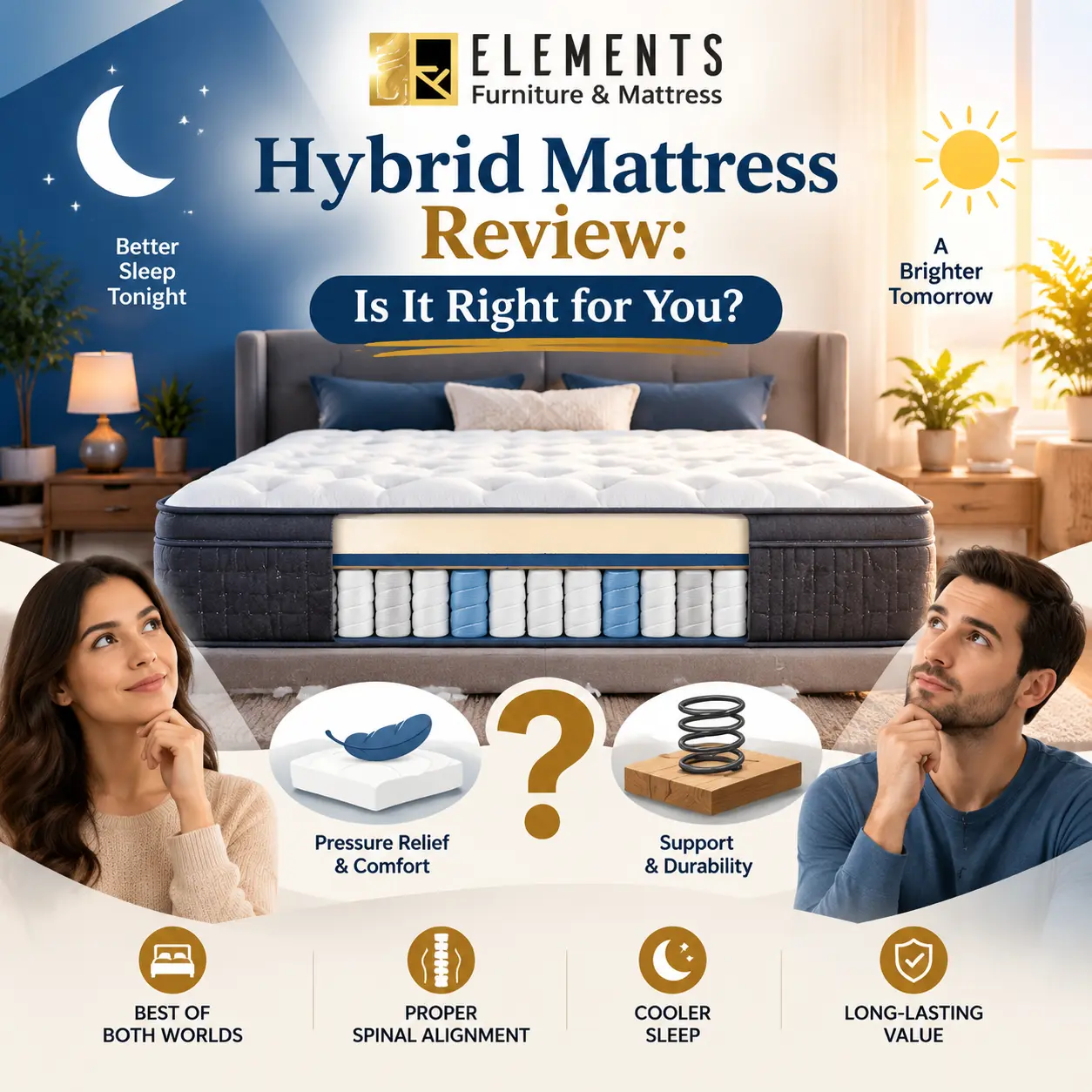
A mattress can look great in a bedroom set and still leave you tossing, turning, or waking up sore. That is why a hybrid mattress review should go beyond buzzwords. Hybrid mattresses combine the pressure relief many shoppers like in foam with the responsive support of coils, creating a versatile feel for everyday sleep.
For first apartments, growing families, guest rooms, and primary bedrooms, a hybrid can be a smart middle ground. It is not automatically the best choice for every sleeper, but it offers a balanced blend of comfort, airflow, and edge support that works well for many households.
What Is a Hybrid Mattress?
A hybrid mattress uses at least two distinct comfort systems. Most designs pair a pocketed coil support core with layers of memory foam, responsive foam, latex-like foam, or cooling materials above it. The result is a mattress that has more structure and bounce than an all-foam bed while feeling more cushioned than a traditional innerspring mattress.
The coil system does much of the heavy lifting. Individually wrapped coils can respond separately to movement and body weight, helping the mattress support different areas of the body instead of acting like one solid surface. The foam layers add contouring around pressure points such as shoulders, hips, and lower back.
That combination matters because most people do not want an extreme feel. A mattress that is too soft can make the midsection sink too far. One that is too firm can put uncomfortable pressure on the shoulders and hips. A well-made hybrid aims for comfortable cushioning with dependable support underneath.
Hybrid Mattress Review: The Comfort You Can Expect
The feel of a hybrid mattress depends on its foam layers, coil count, thickness, and firmness rating. Still, most hybrids offer a few recognizable benefits.
First, they are responsive. You can usually change positions more easily than on a deep memory foam mattress. This is especially helpful for combination sleepers who move from side to back or stomach during the night. Instead of feeling stuck in one spot, you get a little lift from the coil layer.
Second, hybrids often provide better temperature control than solid foam mattresses. Coils create open space for air to move through the mattress, while many models add breathable covers or cooling foams. Hot sleepers should still check the specific materials, since a thick top layer of traditional memory foam can retain more heat than a lighter, more breathable comfort layer.
Third, the edges tend to feel more stable. Strong edge support gives you more usable sleep surface, which is valuable for couples, people who sit on the side of the bed to get dressed, and anyone furnishing a smaller bedroom where sizing up may not be practical.
Who Usually Sleeps Well on a Hybrid?
Hybrid mattresses are popular because they accommodate a wide range of sleeping positions. The best firmness for you, however, still depends on how you sleep and what your body needs.
Side sleepers
Side sleepers often need extra cushioning at the shoulders and hips. A medium or medium-soft hybrid can help reduce pressure while the coils keep the waist and lower back from sagging. If you have a very lightweight frame, be careful with firmer models, which may feel harder than expected.
Back sleepers
Back sleepers generally do well with a medium to medium-firm hybrid. Look for a mattress that supports the natural curve of the spine without letting the hips sink too deeply. A quilted top or modest foam comfort layer can add comfort without losing the stable feel back sleepers often prefer.
Stomach sleepers
Stomach sleepers usually need a firmer, flatter surface to avoid lower-back strain. A medium-firm or firm hybrid with a supportive coil base is often a better fit than a plush, thick-top design. The goal is to keep the body lifted and aligned, not folded into the mattress.
Couples and families
For couples, a hybrid can offer a practical compromise when one person prefers cushioning and the other wants a more supportive feel. Pocketed coils can also help limit motion transfer compared with older connected-coil designs. No mattress removes movement completely, but a hybrid with quality foam layers can make a partner’s movement less noticeable.
The Trade-Offs to Know Before You Buy
A hybrid mattress is a strong all-around option, but it is not a one-size-fits-all answer. Knowing the trade-offs can help you shop with confidence.
Hybrids are often heavier than basic foam mattresses because of their coil systems. That can make moving, rotating, or setting up a king-size mattress more of a two-person job. Before ordering, measure your bedroom, hallways, and stairways, especially if you are furnishing an upstairs room or apartment.
They can also cost more than entry-level innerspring models. The upside is that you are paying for multiple comfort components rather than a single coil unit with a thin top layer. Value shoppers should focus on construction and comfort, not just the sale price. A mattress used every night needs to feel supportive after the excitement of a new bedroom makeover has passed.
Finally, not every hybrid has the same motion control or cooling performance. Read the product details for the type of foam, the stated firmness, mattress height, and any edge reinforcement. A hybrid label alone does not tell the whole story.
How to Choose the Right Hybrid Mattress Size
Comfort starts with the feel, but size affects how well a mattress fits your life and your room. A twin or full hybrid can be a practical choice for kids’ rooms, teens, guest spaces, and compact apartments. A queen remains the go-to option for many couples because it offers comfortable shared space without taking over an average bedroom.
A king is ideal when you want maximum room to stretch out, share the bed with children or pets, or create a spacious primary bedroom retreat. Just make sure your bed frame, foundation, bedding, and room layout are ready for the larger footprint.
Mattress height matters, too. A taller hybrid can feel more substantial and may be easier to get in and out of, but it can also require deep-pocket sheets. If you are pairing it with a platform bed or adjustable foundation, confirm that the mattress is compatible and that the finished bed height feels comfortable for you.
A Quick In-Store and At-Home Shopping Checklist
When comparing hybrid mattresses, start with your usual sleep position and work backward. Think about whether you wake up hot, share your bed, need more edge support, or prefer a soft sink-in feel versus a more lifted, responsive surface.
Use these four questions to narrow the choices:
- Does the firmness match how I normally sleep?
- Will the mattress size leave enough room to move around the bedroom?
- Do the materials address my cooling, motion, or support concerns?
- Does the price fit my budget without sacrificing the features I use every night?
If possible, spend more than a few seconds testing a mattress. Lie in your normal sleeping position and notice whether your shoulders, hips, and lower back feel supported. Sit on the edge. Change positions. A mattress should feel comfortable right away, but it should also feel stable enough to support restful sleep over time.
Build a Better Bed Around Your Mattress
The mattress is the center of your sleep setup, but the right supporting pieces can make the room work harder for you. A sturdy bed frame helps create a finished look, while an adjustable foundation can add flexibility for reading, relaxing, or elevating your legs. Add breathable sheets, a mattress protector, and pillows suited to your sleep position to get more from your new bed.
At Elements Home Furnishings, shoppers can coordinate mattresses with bedframes, bedroom furniture, bedding essentials, and accent pieces without making the room feel overdone. A comfortable bed should fit your style, your space, and your budget.
The best hybrid mattress is the one that makes bedtime feel easy and morning feel better. Choose the support level your body needs, leave room in the budget for a complete sleep setup, and give your bedroom the comfort upgrade it deserves.